Anna's perspective on regenerative tourism
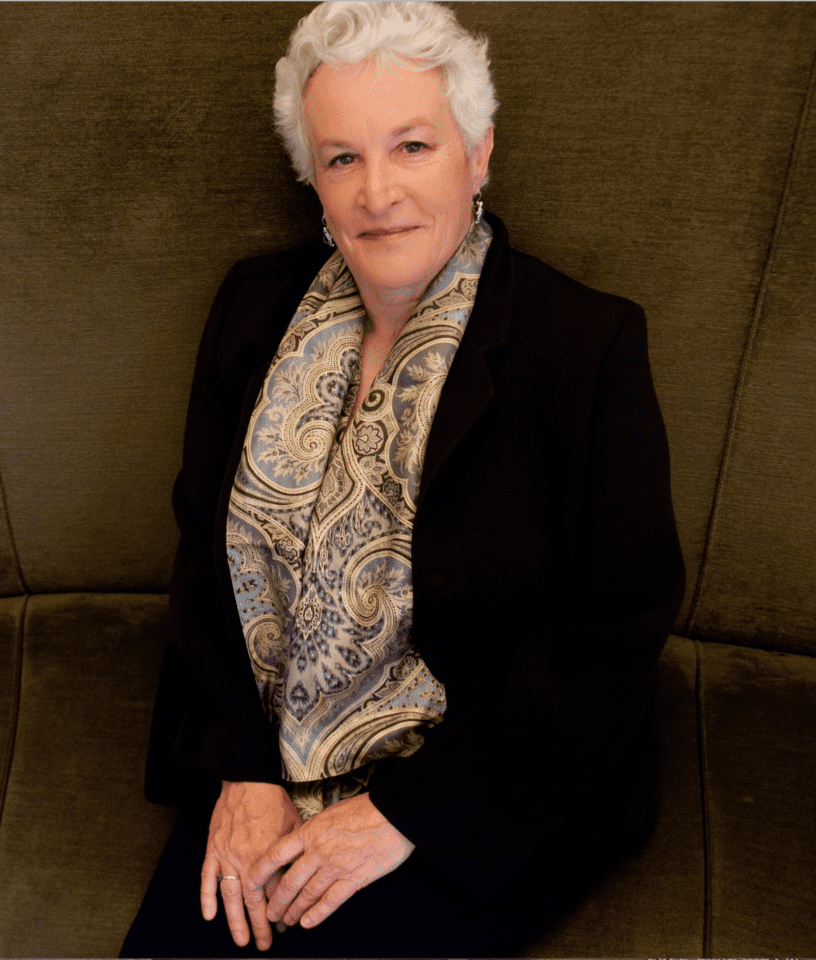
Sometimes you meet someone who sees things differently. Someone who dares to name what feels uncomfortable. Anna Pollock is one of those people. For decades, she has followed the development of tourism around the world. She has seen it grow, seen what it has brought, and where it begins to create tension.
For Anna, everything is connected. People, place and nature do not exist separately from one another. Tourism can give a lot, but only when it is approached with care. That is what drives her. She encourages change and shows that things can be done differently. This way of seeing closely aligns with how we look at the Wadden. Colleagues Fay and Jannie sat down with Anna for a conversation.
A different way of seeing
For many destinations, the difference between sustainable and regenerative tourism is not always clear. Both concepts are about travelling more consciously, taking responsibility and reducing negative impact. But according to Anna Pollock, regenerative tourism goes much further than that. We asked her what lies at the heart of this shift. Her answer does not begin with new activities or better campaigns, but with a different way of looking at tourism itself.
“Regeneration is not simply making an existing system better,” says Anna. “It involves a whole new way of seeing, being and doing.” By this, she means that regenerative tourism is not just about improving the sector. It asks a bigger question: how can tourism contribute to a healthy place, where nature, communities, culture and economy are connected?
Tourism as a living system
One of Anna’s clearest messages is that tourism should not be seen as a separate industry. She describes tourism as “a set of complex, interdependent, dynamic, networked systems”. By this, she means that tourism is always connected to much more than visitors, businesses or marketing. It touches housing, food, water, mobility, nature, culture, local economies and the wellbeing of communities.
We asked Anna what this means for regions that want to work with regenerative tourism. According to her, it does not begin with tourism alone, but with the place as a whole. “Individual humans cannot thrive in an unhealthy economy or an unhealthy environment,” she says. “Instead of just focusing on our business, our sector, we need to open our eyes to the whole.” Regenerative work therefore requires time, learning and a willingness to see connections that often remain hidden from within one organisation, sector or policy agenda.
“ We're being required to learn how nature works and live in harmony with her ”
Anna Pollock
Place as a starting point
According to Anna, regenerative tourism must always begin with the place itself. “Place must lead,” she says. By this, she means that local identity, nature, culture and the lived experiences of residents should not be added later as a layer of storytelling or branding. They should guide the choices being made from the very beginning.
A place is more than a destination for visitors. It is also a home: for people, but also for nature and other forms of life. That is why regenerative work requires a deep understanding of what makes a place alive. What strengthens it? What makes it vulnerable? And what kind of development truly belongs here? According to Anna, this cannot be imposed from the top down. Organisations can support and create the right conditions, but the real movement starts close to the place itself, together with communities that are willing to learn and explore. For Anna, this work is both “hands on” and “hearts on”: practical, but also human and deeply connected.
Changing step by step
A shift towards regenerative tourism can feel big and complex. It asks regions to rethink success, value and responsibility. According to Anna, it is therefore important not to try to change everything at once. “You can’t change everyone at once,” she says. “It’s a gentle educational process.”
In her work, Anna also refers to this process as “Back to Life”: learning to understand how life works and how people can work together with living systems. In regions such as Flanders, New Zealand and Swedish Lapland, she has seen how valuable it is to start with communities that already share a sense of home. There, people can get to know each other, share concerns and ambitions, and discover the strengths that are already present. From that shared starting point, the question slowly emerges of what helps a place and its people to flourish. The focus is not a strategy document, but a shared sense of direction and meaning.
“ Shifting to a regenerative mindset is both a "hands on" and a "hearts on" process that involves a deep learning process ”
Anna Pollock
Systems thinking in practice
Holistic thinking and systems thinking can quickly sound abstract. For entrepreneurs, policymakers and other stakeholders, it may feel theoretical or far removed from everyday practice. Still, Anna emphasises that this way of thinking can be learned step by step. According to her, it starts with asking different questions. Do we only look through the lens of numbers, analyses and plans? Or do we also take feeling, experience, intuition and local knowledge seriously?
According to Anna, no single perspective is enough on its own. Those who want to work regeneratively need to learn to look at the whole: at ecological, social, cultural and economic interests at the same time. This also means bringing different voices to the table, not only from tourism, but from the entire place. That may sound unfamiliar in policy or business settings, but the principle is simple: only when you look more broadly can you see what is really going on. Regenerative tourism therefore requires a 360-degree view of the place, and that is not developed overnight. It takes time, practice and a willingness to learn to see differently.